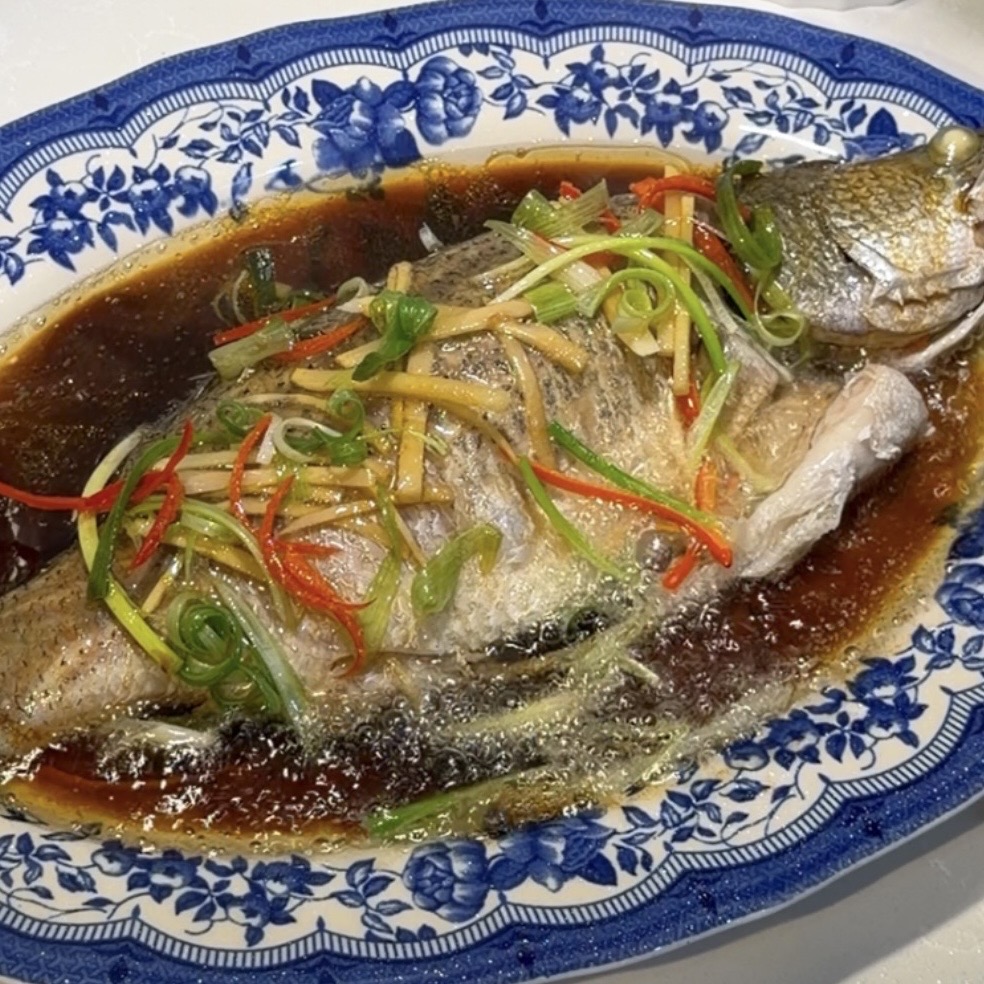
Delicate, fragrant, and incredibly comforting, Chinese steamed fish is a dish that proves simple cooking can be the most satisfying. Fresh seabass is gently steamed with ginger and spring onions to remove any fishiness while infusing subtle aromatics. The fish is then finished with a savoury soy sauce dressing and a dramatic pour of hot oil over fresh julienned ginger, spring onions, and chilli—releasing an irresistible aroma right before serving.
It’s light yet flavourful, making it perfect for family dinners, festive meals, or when you want something nourishing with minimal effort.
INGREDIENTS
For the fish
– 1 whole seabass (cleaned and descaled)
– 1 thumb-sized ginger, sliced
– 2 stalks spring onions, cut into long pieces
For the sauce
– ¼ cup light soy sauce
– 1–2 tbsp brown sugar (or regular sugar), to taste
– 4–5 tbsp sesame oil
– 4-5 tbsp water drippings from the steamed fish
For the toppings
– 1 thumb-sized ginger, julienned (thin matchsticks)
– 1–2 stalks spring onions, thinly sliced
– 1 red chilli, thinly sliced (curl by soaking in ice water if desired)
– ¼ cup neutral oil, heated until hot
HOW TO MAKE IT
- Bring water in a steamer to a boil.
- Place sliced ginger and spring onions on the base of a heatproof steaming dish.
- Lay the seabass on top and stuff the cavity with additional ginger and spring onions.
- Steam for about 15 minutes, or until the fish is fully cooked and flakes easily.
- In a small bowl, mix the light soy sauce, sugar, sesame oil, and 2–3 tbsp of the steaming liquid from the fish. Stir until the sugar dissolves.
- Remove the fish from the steamer and carefully discard the cooked ginger and spring onions used during steaming.
- Top the fish with fresh julienned ginger, sliced spring onions, and red chilli.
- Drizzle the prepared sauce evenly over the fish.
- Heat ¼ cup oil until very hot, then pour it over the aromatics on the fish. The hot oil will sizzle and release their fragrance.
- Serve immediately with steamed rice.
Watch video HERE
FAQ
1. How do I know when the fish is cooked?
The flesh should turn opaque and flake easily with a fork or chopsticks. The thickest part of the fish should no longer look translucent.
2. Can I use fish fillets instead of a whole fish?
Yes. Fillets work well and may cook faster (around 8–10 minutes depending on thickness).
3. Why remove the ginger and spring onions after steaming?
The aromatics used for steaming help remove fishiness, but they become very soft and less fragrant after cooking. Fresh toppings added at the end provide a brighter flavour and better texture.
4. Why must hot oil be poured over the fish at the end?
The hot oil quickly releases the aroma of the ginger, spring onions, and chilli, creating that signature fragrant sizzle. It also lightly cooks the fresh toppings and helps carry their flavour across the fish.
5. Why isn’t there salt in this recipe?
Light soy sauce already provides enough saltiness for the dish. Adding extra salt can easily make the fish too salty, especially since the sauce is poured directly over the fish.
6. My fish turned out watery. What happened?
Fish naturally releases liquid while steaming. You can use a few tablespoons of this liquid in the sauce for extra flavour and discard the excess if needed.
7. What oil should I use for the final pour?
Use a neutral oil such as vegetable, canola, or peanut oil so it doesn’t overpower the aromatics.
8. What can I serve this with?
Steamed jasmine rice and simple greens like garlic stir-fried choy sum or bok choy pair beautifully with this dish.
 SHE HAS CRAVINGS