Preparation time: 10 minutes
Cooking time: 18–20 minutes
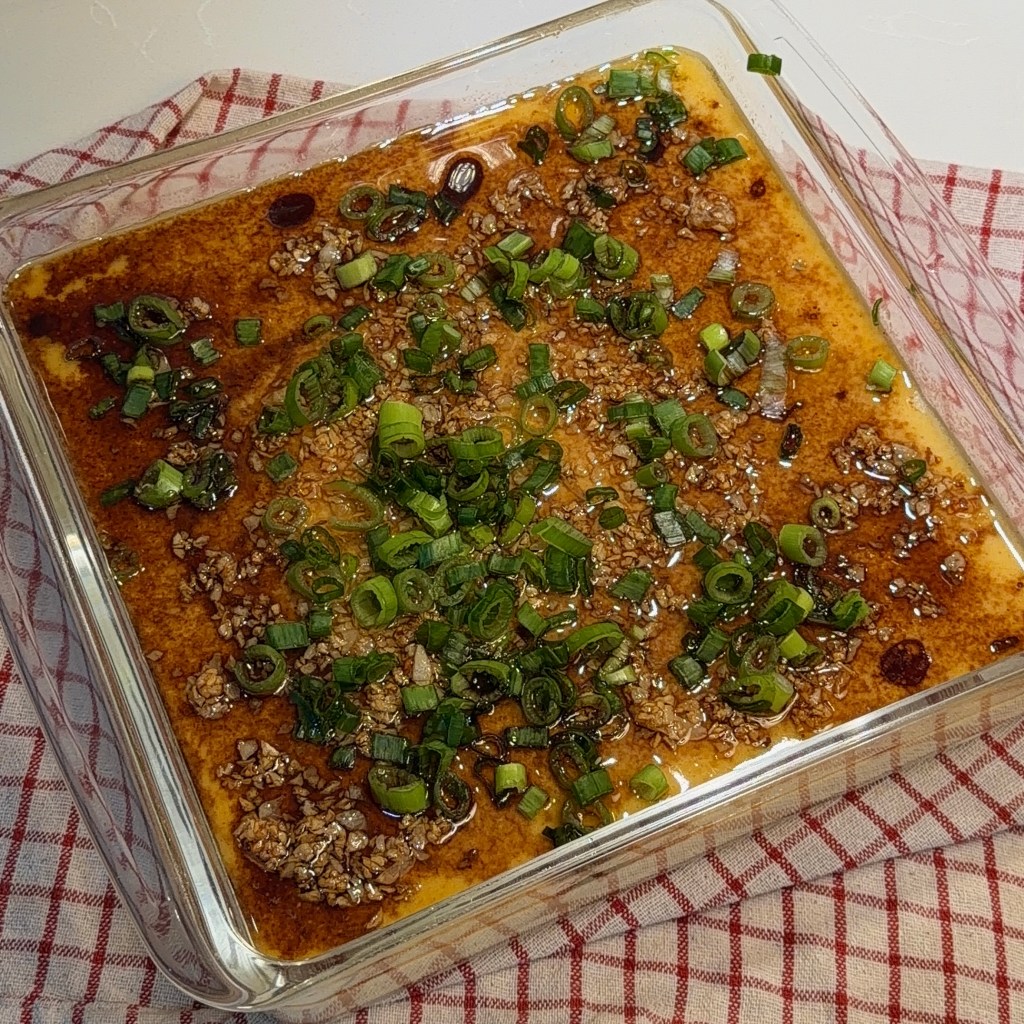
Silky, savoury and softly set like custard, this foolproof Chinese Steamed Egg is one of those simple dishes that always disappears quickly at our family table. It is finished with a soy and sesame sauce, golden crispy garlic and fresh spring onions, then served with plenty of hot rice. It is easy peasy, incredibly comforting and so loved by my family that I think my Chinese ancestors would be proud.
INGREDIENTS (SERVES 6-8 PAX)
For the steamed egg:
- 8 large eggs
- 4 cups warm water, made with 1 cup boiling water and 3 cups room-temperature water
- 1 tsp salt
- 1 tsp chicken stock powder
- 2 tsp neutral cooking oil
- 2 dashes ground white pepper
For the sauce:
- 30ml light soy sauce
- 30ml sesame oil
- 1 tsp sugar
For the toppings:
- 2 heaping tbsp minced garlic
- Cooking oil, enough to lightly cover the base of a small pan (to fry the garlic)
- 1 small bunch spring onions, approximately 2–3 stalks, thinly sliced
HOW TO MAKE IT
- Prepare your steamer by adding enough water for approximately 20 minutes of steaming. Position the steaming rack above the water, close the lid and bring the water to a full boil.
- Crack the eggs into a large mixing bowl. Add the salt, chicken stock powder, oil and white pepper. Whisk until everything is thoroughly combined and a layer of light foam forms.
- Slowly pour ½ cup of the warm water into the eggs while whisking. This gently tempers the eggs and helps the custard cook more evenly. Continue whisking until the mixture becomes foamy again.
- Pour in the remaining warm water and whisk until fully combined.
- Pass the egg mixture through a fine-mesh sieve or tea strainer into a large, shallow, heatproof dish. This removes any clumps and larger bubbles, giving the steamed egg its silky texture. Skim away any remaining bubbles on the surface if needed.
- Carefully place the dish inside the preheated steamer. Close the lid, reduce the heat to medium and steam for 18–20 minutes.
- While the egg is steaming, combine the light soy sauce, sesame oil and sugar. Stir until the sugar has dissolved, then set aside.
- Heat just enough neutral oil to lightly cover the base of a small pan over medium-low heat. Add the minced garlic and fry until golden brown and crispy. Remove it from the oil immediately, as the garlic will continue to darken after cooking. Thinly slice the spring onions and set aside.
- After 18 minutes, gently nudge the egg dish. The surface should be set while the centre jiggles softly like jelly. If you can still see liquid moving beneath the surface, continue steaming in 2-minute intervals until set.
- Carefully lift the steamed egg out. Pour the sauce evenly across the entire surface, then finish with the crispy fried garlic and sliced spring onions. Serve immediately.
Watch the video HERE.
Frequently Asked Questions
1. What makes this steamed egg so silky?
The warm water, gradual tempering, straining and gentle steaming all work together to create that smooth, custardy texture. Most importantly, do not overcook it – the centre should still have a soft jelly-like wobble when it comes out of the steamer.
2. Why do I need to use warm water?
Warm water blends easily with the tempered eggs and helps the custard cook more evenly. Cold water may extend the cooking time, while water that is too hot can begin cooking parts of the egg before it reaches the steamer. Best to use the combination I stated above as it has been tested to work time and time again.
3. Why should I strain the egg mixture?
Straining removes clumps, stringy pieces of egg white and excess bubbles. These can create an uneven or pitted surface once the egg is steamed.
4. Do I need to cover the egg dish while steaming?
I steam mine with the egg dish uncovered but with the steamer lid closed. However, if your steamer lid releases a lot of condensation, loosely cover the egg dish with a heatproof plate or aluminium foil to prevent water droplets from falling onto its surface.
5. Can I make steamed egg without a steamer?
Yes! You can create a makeshift steamer using a large wok or deep pan with a tight-fitting lid.
Place a sturdy steaming rack or metal trivet inside the wok. If you do not have one, turn a small, sturdy heatproof bowl upside down and position a heatproof plate securely on top. The egg dish can then sit on the plate.
Add enough water for approximately 20 minutes of steaming, ensuring that it remains below the platform and does not touch the egg dish. Close the lid and bring the water to a full boil before carefully placing the egg dish inside.
Make sure the setup is completely stable, there is enough space for steam to circulate and the lid can close properly. Avoid creating a tall or loosely stacked tower of dishes, as it may shift during steaming.
6. Why are there grey specks on my steamed egg?
Don’t panic, they are simply specks of white pepper! They are completely normal and do not mean anything has gone wrong.
7. Why did my steamed egg turn out bubbly or full of holes?
The steamer may have been too hot, or the eggs may have cooked for too long. Bring the steamer water to a boil first, then reduce the heat to medium once the eggs go in. Straining the egg mixture and removing any surface bubbles also help.
8. What if my steamed egg is still liquid after 20 minutes?
The strength of your steamer and the depth of your dish can affect the cooking time. Continue steaming in 2-minute intervals until the surface is set and the centre jiggles like jelly. A deep bowl will usually take longer than a wide, shallow dish.
9. Can I use an alternative to chicken stock powder?
Yes! Vegetable stock powder or mushroom stock powder both work wonderfully in place of chicken stock powder. I would not recommend leaving the stock powder out altogether, as it gives the steamed egg its deliciously rounded, savoury flavour.
10. Can I halve the recipe?
Yes. Halve all the ingredients and steam the mixture in a smaller dish. Begin checking it after approximately 12–15 minutes, as a smaller portion may cook more quickly.
11. Can steamed egg be made ahead?
Steamed egg is at its silkiest when freshly cooked. You can prepare the sauce, crispy garlic and sliced spring onions ahead, then steam the eggs shortly before serving. Leftovers can be covered and refrigerated once cooled, then gently heated in the microwave until piping hot.

