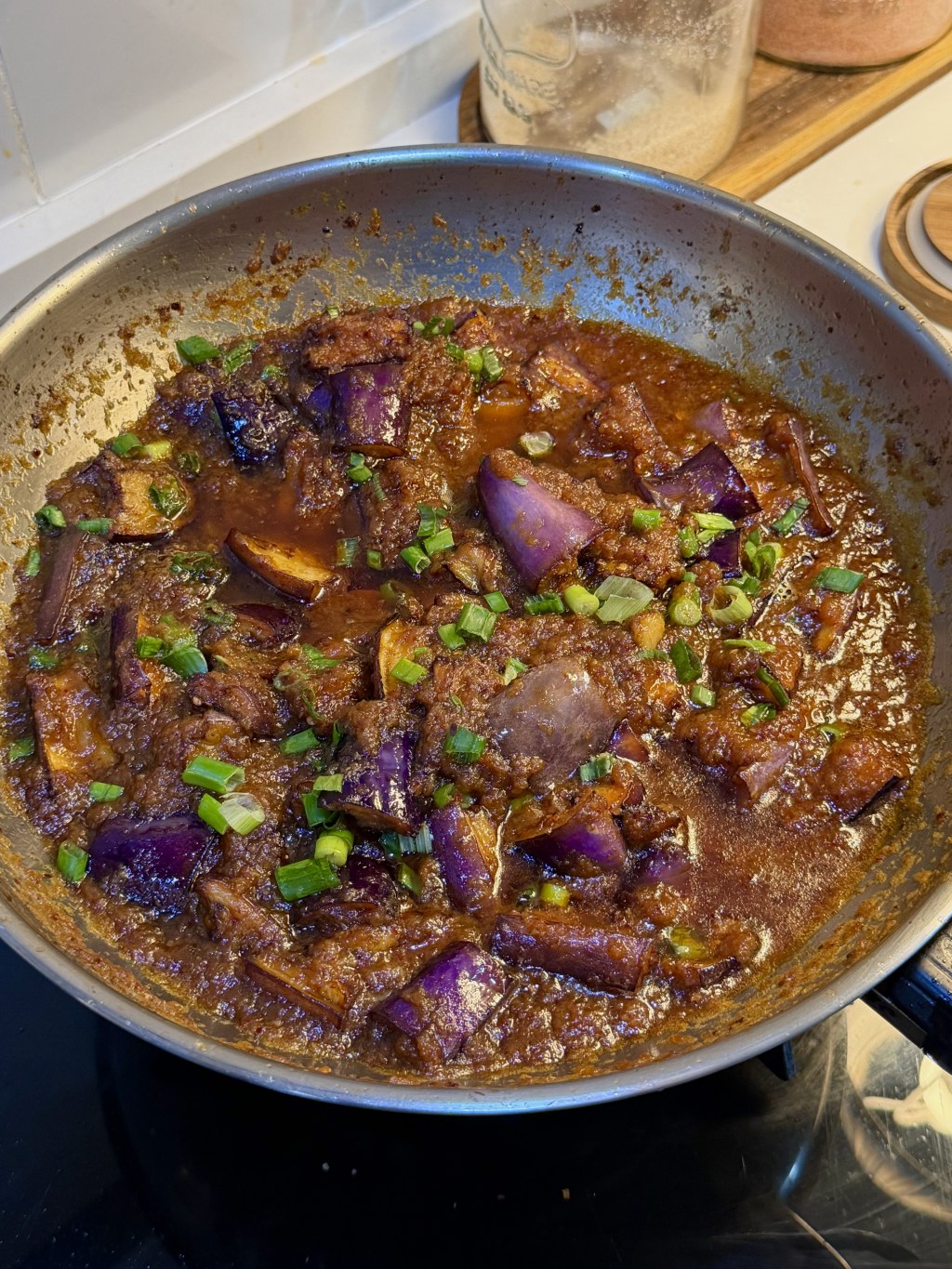
This Sambal Tumis Terung, or Eggplant Sambal, is one of those recipes that immediately makes my mouth water and reminds me of home because it’s a special recipe I learnt from my mum.
And the best part? You don’t need dried chillies.
No cleaning, soaking or blending dried chillies. Instead, my mum taught me to use a combination of chilli flakes and chilli powder to build the sambal and somehow you still get that rich, deeply cooked sambal flavour we all love.
The eggplants are first deep-fried until beautifully golden and slightly crisp, then tossed through a sweet and spicy sambal made with shallots, dried shrimp, garlic and tamarind.
And yes, this sambal needs sugar. Quite a lot of it actually. Don’t be shy, the sweetness is what balances the heat, saltiness and tanginess of the sambal.
Serve this with hot rice and a few other dishes and honestly… you’re sorted.
INGREDIENTS (SERVES 8-10)
For the Eggplant
- 4 large long eggplants, or 6 medium eggplants
- Oil, enough for deep frying
Sambal Base Paste (To blend)
- 15-20 shallots or 2 large red onions
- 60–80g dried shrimp
- 5 cloves garlic
- Roughly 1 cup water
For the Sambal
- 3–4 tbsp chilli flakes
- 2 tsp chilli powder
- 1/4 cup tamarind juice (tamarind paste + water)
- 5 tbsp sugar, or to taste
- Approximately 2 tsp salt, or to taste
HOW TO MAKE IT
- Soak the dried shrimp in hot water for approximately 5 minutes, then drain well.
- Add the shallots or red onions, soaked dried shrimp, garlic and water into a blender. Blend until relatively smooth. Set aside.
- Slice the eggplants lengthwise into wedges or your preferred shape. Try to keep the pieces relatively similar in size so they cook evenly.
- Heat plenty of oil in a wok over medium-high heat. Once hot, deep-fry the eggplant in batches for approximately 8 minutes, or until golden brown, tender and slightly crisp around the edges. Do not overcrowd the wok as this will lower the temperature of the oil and make the eggplant greasier.
- Remove the eggplant and transfer onto a plate lined with kitchen towels to drain the excess oil. Repeat until all the eggplant is cooked.
- Carefully remove most of the frying oil, leaving approximately 2–3 cups in the wok.
- While the oil is still hot, add the blended sambal paste. Fry over medium heat, stirring regularly, until fragrant and the raw onion smell has cooked away.
- Add the chilli flakes and chilli powder. This is my mum’s little shortcut. Instead of preparing and blending dried chillies, the chilli flakes and chilli powder turn the onion base into a beautifully rich sambal.
- Mix everything together well and continue frying patiently until the sambal darkens and you begin to see the oil separating from the paste.
- Pour in the tamarind juice and mix well. Continue frying until the sambal reduces and develops a deeper, darker red colour. Don’t rush this part. Giving your sambal enough time to properly cook is what develops that deep flavour.
- Add approximately 4-5 tablespoons of sugar and 2 teaspoons of salt. This is my preferred measurement, but please taste and adjust accordingly to suit your tastebuds. The sambal should have a beautiful balance of spicy, sweet, and salty flavours.
- Return the fried eggplants to the wok and gently toss everything together until every piece is generously coated in sambal. Be gentle here as the cooked eggplant will be very soft.
- Serve immediately with hot rice and your favourite dishes.
Watch the video HERE.
FREQUENTLY ASKED QUESTION
- Do I really not need dried chillies for this sambal?
Nope! That’s exactly what makes my mum’s recipe so convenient.
Instead of cleaning, soaking and blending dried chillies, we use chilli flakes and chilli powder. Once properly fried with the sambal base until the oil begins separating, you still get a wonderfully rich and deeply flavoured sambal.
- Can I use shallots or red onions?
Both work. I personally love using shallots because they give the sambal a lovely sweetness, but two large red onions are a perfectly good alternative when you don’t feel like peeling 20 shallots.
- Why is there dried shrimp in the sambal?
Dried shrimp gives the sambal a savoury, slightly funky umami flavour that works beautifully with eggplant. It is quite an important part of this particular recipe and one of the flavours that makes my mum’s sambal terung so good.
- What can I use if I don’t have dried shrimp?
You can substitute it with belacan, also known as fermented shrimp paste.
Belacan is much stronger and more concentrated than dried shrimp, so you won’t need nearly as much. Start with around 1–2 teaspoons, or slightly more to taste.
If you’re using a block of belacan, lightly toast it first before adding it to the sambal base.
The flavour and texture won’t be exactly the same – dried shrimp gives the sambal a little more body, but belacan will still give you that lovely savoury, umami depth.
- Can I reduce the chilli?
Yes. Start with around 2 tablespoons of chilli flakes instead of 3–4 tablespoons if you prefer something milder. You can always add more, but you can’t take it back out!
- Five tablespoons of sugar?!
HAHA YES! Sambal is all about balance. The sugar doesn’t simply make it sweet, it balances the chilli, tamarind, saltiness and savouriness of the dried shrimp. Start with slightly less if you prefer, taste, then adjust. But don’t be scared of the sugar.
- How do I know when the sambal has been cooked enough?
The sambal will become darker, richer and glossier, and you’ll start to see the oil visibly separating around the edges.That’s a good sign that the sambal has been properly cooked and its flavours have had time to develop.
- Do I have to deep-fry the eggplant?
For this recipe, I highly recommend it. Eggplant absorbs the sambal beautifully after frying, while the slightly golden exterior keeps the pieces from completely falling apart once they’re tossed through the sauce.
You could air-fry or roast the eggplant for a lighter version, but the final texture and flavour won’t be quite the same.
- How do I stop the eggplant from becoming too oily?
Make sure your frying oil is properly hot before adding the eggplant and fry it in batches. Overcrowding the wok lowers the oil temperature, which makes the eggplant absorb even more oil. Drain the cooked pieces well on kitchen towels before adding them to your sambal.
- Can I make this using dried chillies instead?
Absolutely. If you prefer the traditional route, you can use approximately 20 dried chillies instead of the chilli flakes and chilli powder.
Remove some of the seeds if you prefer it less spicy, then soak the dried chillies in hot water until softened before blending them together with the sambal base. It takes a little more prep, which is exactly why I love my mum’s shortcut, but it works beautifully too.
- Can I use fresh chillies instead?
You can, but I wouldn’t recommend it for this particular recipe.
Fresh chillies contain much more water and have a brighter, fresher flavour, so you won’t get quite the same deep, rich sambal flavour or colour.
If that’s all you have, you can still blend them with the sambal base and cook the mixture down for longer to remove as much moisture as possible. Just expect the final sambal to taste slightly different.
- How long can I keep Sambal Tumis Terung?
Store leftovers in an airtight container in the refrigerator for up to 3 days. The eggplant will soften further as it sits in the sambal, but the flavour will still be delicious. Reheat gently in a pan or microwave before serving.

