It is a sombre week for Malaysians, following the passing of Tun Dr Siti Hasmah Mohd Ali at the age of 100.
For someone who lived such an extraordinary life, there is something incredibly endearing about knowing that among the dishes she enjoyed was something as simple and familiar as masak asam – a reminder that a public figure like Tun was also a wife, mother and grandmother; someone whose life, like so many of ours, was anchored by family and home. Food has a way of bringing us back there.
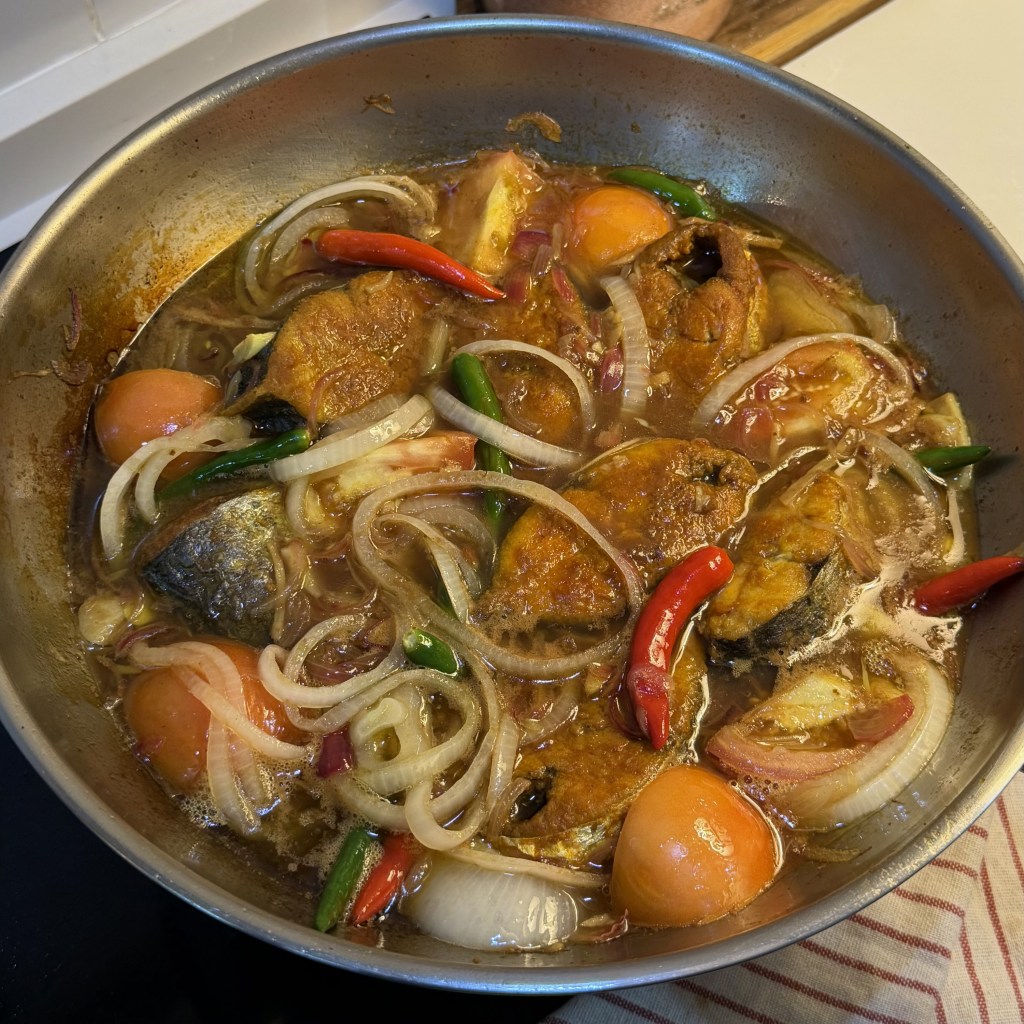
Ikan masak asam is exactly that kind of dish. Crispy fried fish is simmered gently in a tangy tamarind gravy with ginger, garlic, chillies, tomatoes and onions. It is sour, sweet, savoury and a little spicy, with each flavour balancing the next.
Nothing extravagant. Just good, familiar food that demands a plate of hot rice beside it.
So this recipe is made in remembrance of Tun Dr Siti Hasmah, and of the beautiful legacy she leaves behind.
Al-Fatihah.
INGREDIENTS (Serves 4-5 Pax)
For the fish
- 5-6 small to medium slices Spanish mackerel (ikan tenggiri)
- 2 tsp turmeric powder
- Salt, to taste
- Oil, for frying
For the tamarind sauce
- 5 shallots OR 1 medium red onion, thinly sliced
- 5 cloves garlic, thinly sliced
- 5 cm ginger, thinly sliced
- 500 ml tamarind juice, made by mixing 2 tbsp tamarind paste with 500 ml water
- Salt & sugar, to taste
To finish
- 1–2 tomatoes, cut into wedges
- Red & Green bird’s eye chillies, sliced or left whole, to taste
- 1 large brown onion, sliced into rounds
HOW TO MAKE IT
- Season the fish slices with turmeric powder and salt. Rub the seasoning evenly over the fish and set aside while you prepare the remaining ingredients.
- Heat a generous amount of oil in a wok or frying pan over medium-high heat. Fry the fish in batches until golden and crisp on both sides. Each side should take around 5 mins depending on the size of your fish. Once done, remove from the oil and set aside.
- Carefully remove most of the frying oil, leaving around 4-5 tablespoons in the pan.
- Add the sliced shallots or red onion, garlic and ginger. Sauté over medium heat until softened, fragrant and lightly golden.
- Pour in the tamarind juice and stir everything together. Bring it to a gentle simmer.
- Season with salt and sugar to taste. The gravy should have a lovely balance of sour, sweet and savoury, while still allowing the tanginess of the tamarind to come through.
- Gently place the fried fish into the gravy. Spoon some of the gravy over the fish instead of stirring too vigorously so the slices do not break apart.
- Allow everything to simmer gently for a few minutes so the fish can absorb some of the tangy gravy.
- Add the tomatoes, bird’s eye chillies and sliced brown onion.
- Simmer for another 2–4 minutes, or until the tomatoes have softened slightly and the onions have just lost their raw bite while still retaining some texture.
- Taste the gravy one last time and adjust the salt, sugar or tamarind if necessary.
- Serve immediately with plenty of hot steamed rice.
Watch the video HERE.
FREQUENTLY ASKED QUESTIONS
- What is ikan masak asam?
Ikan masak asam is a simple Malaysian fish dish cooked with tamarind. “Masak asam” broadly refers to cooking something in a sour or tangy gravy, with tamarind providing that distinctive acidity.
There are many versions across Malaysian households, but this one combines crispy fried fish with a light tamarind gravy flavoured with ginger, garlic, onions, tomatoes and chillies. It is sour, slightly sweet, savoury and spicy all at once.
- What is ikan tenggiri in English?
Ikan tenggiri is commonly known as Spanish mackerel. It has firm flesh and holds its shape well during frying and simmering, which makes it perfect for this recipe.
- Can I use a different fish?
Yes. Any firm fish that can withstand frying and a short simmer in the gravy will work well. Spanish mackerel is my choice, but pomfret, snapper, threadfin or sea bass can also be used depending on what is available to you.
Cooking time may vary depending on the thickness of your fish.
- Do I have to fry the fish first?
For this version, I highly recommend it. Frying gives the fish a beautifully golden exterior and helps it stay intact once it goes into the tamarind gravy.
You do not necessarily need it extremely crispy, but giving it a good fry first adds both flavour and texture.
- How do I make tamarind juice from tamarind paste?
For this recipe, mix 2–3 tablespoons of tamarind paste with approximately 500 ml water. I use the brand Adabi.
If your tamarind paste contains seeds or a lot of pulp, massage it into the water with your fingers or a spoon, then strain the liquid before using.
Tamarind products vary in strength, so start with less if yours is particularly concentrated. You can always add more after tasting.
- What can I substitute for tamarind?
Tamarind really gives this dish its characteristic flavour, so I recommend using it whenever possible. If you absolutely cannot find it, water mixed with vinegar can provide acidity, but the flavour will be noticeably different.
- How sweet should the gravy be?
This should not taste like a sweet sauce. The sugar is there to soften and round out the sharpness of the tamarind. Add a little at a time, taste, and stop once the sour, sweet and savoury flavours feel balanced. I personally still like the tamarind to be the star.
- Is ikan masak asam very spicy?
It does not have to be. Most of the heat in this recipe comes from the bird’s eye chillies added towards the end. For something milder, use fewer chillies or leave them whole. For more heat, slice or lightly crush them before adding them to the gravy.
- Why shouldn’t I stir the fish too much after adding it to the gravy?
Once cooked, fish can break apart quite easily. Instead of stirring everything vigorously, gently shake the pan or use a spoon to ladle the gravy over the fish. This allows the fish to absorb all that flavour while keeping the slices intact.
- Can I make ikan masak asam ahead of time?
Yes. In fact, after sitting for a little while, the fish absorbs even more of the tamarind gravy.
Store leftovers in an airtight container in the refrigerator for up to 2 days. Reheat gently over low heat and avoid stirring too much so the fish does not break apart.

