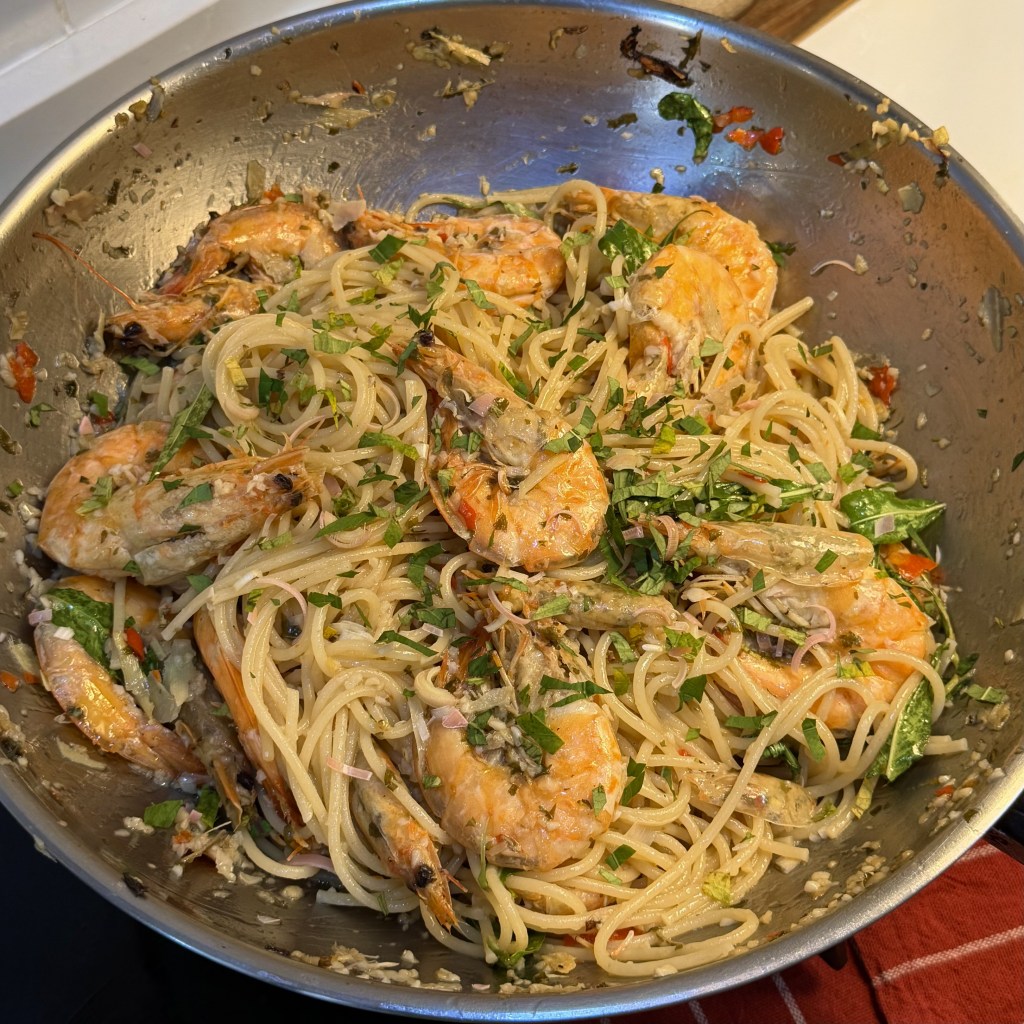
Meet my Kantan Kesum Olio – a spicy, fragrant pasta inspired by the simplicity of aglio olio, but built around two of my favourite local aromatics: bunga kantan and daun kesum.
Bunga kantan (torch ginger flower) brings a floral, citrusy fragrance, while daun kesum (also known as laksa leaves or Vietnamese coriander) adds that fresh, peppery herbaceousness we know and love in Malaysian cooking.
Together with garlic and cili padi, they are roughly blended and gently cooked in olive oil until incredibly fragrant. A little oyster sauce gives the pasta savoury depth, while calamansi keeps everything bright and tangy.
Add juicy prawns, al dente spaghetti and a splash of pasta water, and somehow it all just works.
INGREDIENTS
For the pasta
- 250g spaghetti (boiled till al dente)
- 1 mug pasta water, reserved
- 300–400g prawns (cleaned and deveined)
- 1 cup olive oil
- 1 tbsp oyster sauce
- Juice of 4-5 small calamansi / limau kasturi (approx. 3–4 tbsp)
- Salt & Sugar, to taste
To roughly blend
- 1 generous handful garlic cloves (peeled)
- 3–4 bird’s eye chillies
- 2 torch ginger flower buds / bunga kantan
- 1 large handful fresh laksa leaves / daun kesum (tougher stems removed)
To finish
- A handful of fresh daun kesum
HOW TO MAKE IT
- Add the garlic, bird’s eye chillies, bunga kantan and daun kesum to a food processor. Pulse until everything is roughly chopped. Do not blend it into a smooth paste – you want some texture to remain.
- Bring a pot of generously salted water to a boil. Cook the spaghetti until al dente according to the packet instructions. Before draining, reserve approximately 1 mug of pasta water. Set the cooked spaghetti aside.
- With the heat switched off, pour the olive oil into a large wok or pan and add the blended aromatics. (Note: If you have time, leave the mixture to sit in the olive oil for around 10 minutes before cooking. This step is optional, but it allows the garlic, kantan and kesum to gently infuse into the oil).
- Turn the heat to low and sauté the mixture slowly until very fragrant.
- Increase the heat slightly to medium and continue stirring. Be careful not to let the garlic, kantan or kesum burn or turn crispy. You want them softened and fragrant rather than browned.
- Add the oyster sauce and calamansi juice. Season with salt and a little sugar to taste, then stir until well combined.
- Add the prawns and cook until just opaque and cooked through.
- Add the cooked spaghetti together with approximately ¼ cup of the reserved pasta water.
- Toss everything thoroughly until the spaghetti is well coated and the pasta water has helped the oil and aromatics cling to every strand. If the pasta looks too dry, add a little more pasta water, one splash at a time.
- Turn off the heat and finish with fresh daun kesum. Do one final toss and serve immediately.
Watch the video HERE.
FREQUENTLY ASKED QUESTIONS
- What is bunga kantan?
Bunga kantan is known in English as torch ginger flower. It is a fragrant edible flower commonly used throughout Southeast Asian cooking, particularly in Malaysian dishes such as asam laksa and nasi kerabu. Its flavour is floral, citrusy and slightly spicy, making it especially good with seafood, chilli and fresh herbs.
- What is daun kesum?
Daun kesum is also commonly known as laksa leaf or Vietnamese coriander. It has a fresh, peppery, slightly citrusy flavour and is one of the herbs that gives dishes such as asam laksa their recognisable aroma.
- Do bunga kantan and daun kesum work well together?
Yes! Very well. Bunga kantan brings floral fragrance, while daun kesum gives the dish a greener, peppery freshness. They are often used together in Malaysian cooking, which is why they work so naturally in this pasta too.
- Why is this called Kantan Kesum Olio?
Because both bunga kantan and daun kesum play an equally important role in the flavour of the dish. Rather than tasting like a traditional aglio olio, this version takes the idea of a simple oil-based pasta and gives it a distinctly Malaysian aromatic profile.
- Why shouldn’t I blend the aromatics into a smooth paste?
A rough blend keeps the mixture lighter and gives the pasta better texture. If everything is blended too finely, it can become heavy and paste-like once cooked. Pulse just until the garlic, chilli and herbs are finely chopped.
- Can I make this less spicy?
Absolutely. Use fewer bird’s eye chillies or omit them completely if you prefer.
- What can I use instead of calamansi?
Fresh lime juice is the closest substitute. Lemon can also work, but start with a smaller amount and adjust according to taste. The acidity is important because it cuts through the olive oil and keeps the pasta bright and fresh.
- Can I leave out the oyster sauce?
You can, but I recommend keeping it in. There is only a small amount, and it gives the pasta subtle savoury depth without making it taste strongly of oyster sauce.
- Can I use another type of pasta?
Yes. Spaghetti works especially well because long pasta strands are great with oil-based sauces, but linguine would also be delicious.
- Can I use something other than prawns?
Yes. Squid, scallops or firm white fish would work beautifully with these flavours. You can also leave out the seafood completely for a simple Kantan Kesum Olio.
- Why do I need pasta water?
The starch in the pasta water helps the olive oil and aromatics cling to the spaghetti instead of simply pooling at the bottom of the pan. Start with about ¼ cup and add more only if needed.
- Can I make this ahead of time?
This pasta is best served immediately while the herbs are fresh, the prawns are tender and the sauce is glossy.
You can, however, roughly blend the garlic, chilli, kantan and kesum earlier in the day, steep them in olive oil and keep the mixture covered in the refrigerator until you are ready to cook. Olive oil doesn’t solidify in the fridge!
- How should I store leftovers?
Store leftovers in an airtight container in the refrigerator and consume within 1–2 days. Reheat gently in a pan with a splash of water, then finish with fresh daun kesum, sliced bunga kantan and a squeeze of calamansi to bring the flavours back

