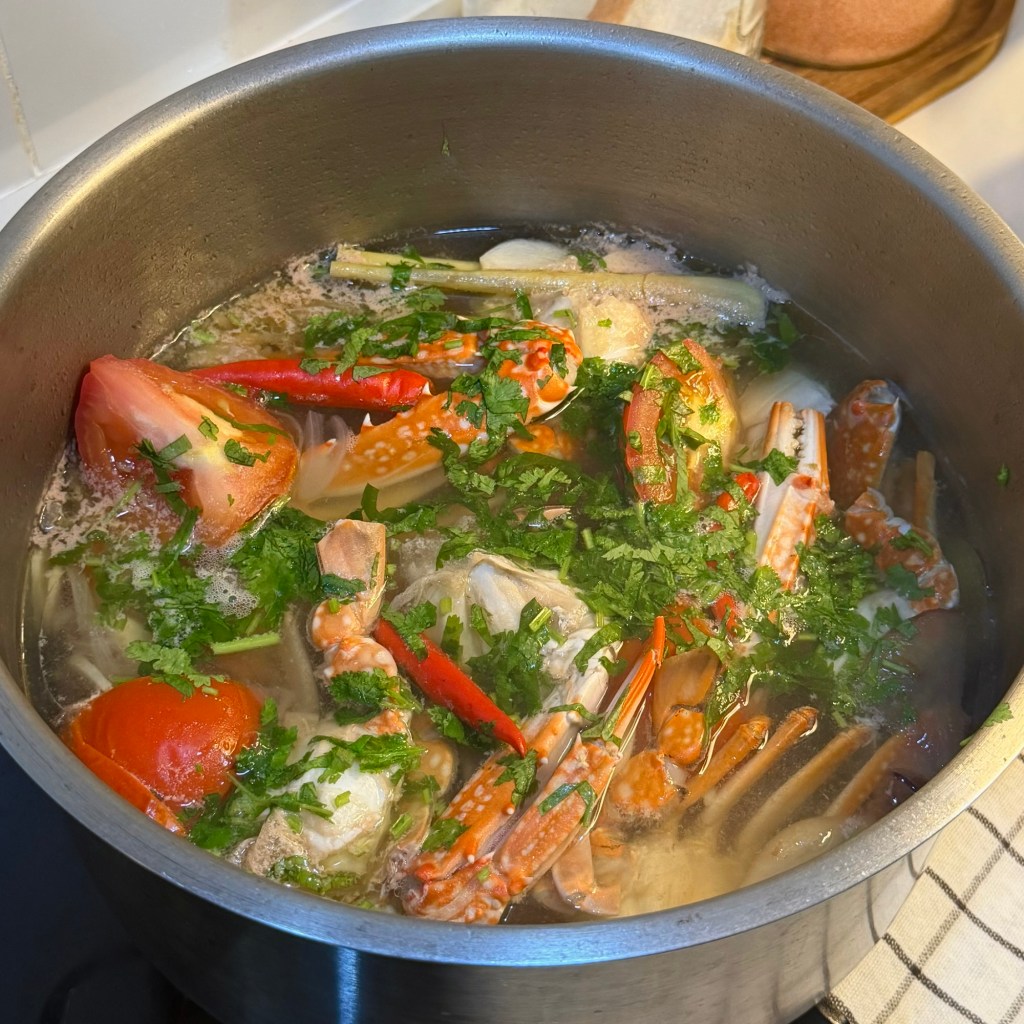
There’s a certain beauty in simplicity, and I think sup ketam captures that perfectly.
This is my take on sup ketam, a beautifully fragrant Malaysian crab soup made with fresh crabs, lemongrass, ginger, lime leaves and a little asam keping for that gentle tang.
What I love about this recipe is how a handful of simple aromatics, together with the natural sweetness of fresh crabs, can create such a wonderfully flavourful broth. It’s light yet savoury, delicate yet comforting, and doesn’t require any complicated ingredients.
Best enjoyed piping hot, on its own or with a bowl of steamed white rice. A simple yet elegant dish that reminds us just how beautiful uncomplicated cooking can be.
INGREDIENTS
Serves 4–5 | Prep time: 15 minutes | Cook time: 20–25 minutes
- 4–5 medium crabs, cleaned and halved (I used blue swimmer crabs, also known as ketam bunga)
- 2–3 tbsp cooking oil
- 2 shallots, thinly sliced
- 4 cloves garlic, thinly sliced
- 1-inch piece ginger, thinly sliced
- 2–3 stalks lemongrass, lightly smashed
- 2 keffir lime leaves (daun limau purut)
- 900ml–1 litre water, depending on how much broth you prefer
- 2–3 tbsp fish sauce, to taste
- 1–2 slices asam keping (dried tamarind slices)
- Salt and sugar, to taste
Optional additions and garnish:
- 1 tomato, quartered
- 2 red bird’s eye chillies, kept whole
- Fresh coriander, for garnish
HOW TO MAKE IT
- Clean the crabs thoroughly and halve each one. Lightly crack the larger claws if necessary to make them easier to eat. Set aside.
- Heat the cooking oil in a large pot over medium heat. Add the sliced shallots, garlic, ginger, lemongrass and lime leaves. Sauté for 3–5 minutes until softened and beautifully fragrant.
- Pour in the water, followed by 2 tbsp fish sauce and the asam keping. Stir well and bring to a gentle boil.
- Reduce the heat and allow the broth to simmer for approximately 5–8 minutes, giving the aromatics time to release their flavours.
- Add the cleaned crabs and cover the pot. Allow to simmer gently for approximately 6–10 minutes, depending on their size, until the shells turn bright orange-red and the flesh is completely opaque and cooked through. Larger crabs may require a little more time.
- If using, add the quartered tomatoes and whole bird’s eye chillies during the final 3 minutes of cooking. Allow the tomatoes to soften slightly while keeping the chillies whole for a gentler heat.
- Taste the broth and adjust with additional fish sauce, salt or a little sugar if needed. Remove the asam keping once you’re happy with the level of tanginess. If you prefer a lighter or more generous broth, simply add a little more water and adjust the seasonings accordingly.
- Turn off the heat and garnish with fresh coriander, if using. Serve immediately while piping hot, either on its own or with steamed white rice.
Frequently Asked Questions
1. What type of crab is best for sup ketam?
Fresh flower crabs (blue swimmer crabs, also known as ketam bunga) and mud crabs (ketam nipah) both work beautifully for this recipe. Flower crabs have a delicate natural sweetness, while mud crabs tend to be meatier. Both will release wonderful flavour into the broth as they cook.
I personally used ketam bunga for this recipe.
2. Can I use frozen crabs?
Absolutely! Frozen raw crabs work too. Just make sure they’re properly thawed in the refrigerator before cooking. That said, I’d recommend fresh crabs whenever possible for the sweetest, most flavourful broth.
3. What is asam keping, and what can I substitute it with?
Asam keping is dried tamarind slices, a sour tropical fruit commonly used in Malaysian cooking to add a gentle acidity to soups and curries. If you can’t find it, a little fresh lime juice works as an alternative. Add it towards the end of cooking, starting with a small amount before adjusting to taste.
4. Is this soup spicy?
Not particularly! The whole bird’s eye chillies are mainly added for a little colour and subtle aroma. Since they’re kept whole rather than sliced or crushed, they release relatively little heat. If you prefer a spicier soup, simply bruise or break open one or two chillies to release more heat.
5. Can I omit the bird’s eye chillies?
Of course! The soup is just as delicious without them. They’re completely optional and won’t significantly affect the overall flavour of the broth.
6. Do I need chicken stock or soup powder?
Not at all! One of the things I love most about this recipe is how the crabs naturally release their sweetness and flavour into the broth. Together with the aromatics and fish sauce, you’ll have a beautifully savoury soup without needing additional stock or soup powder.
7. What if I can’t find keffir lime leaves?
You can omit them if necessary, although they contribute a lovely citrusy fragrance to the broth. A little fresh lime zest can provide a similar citrus note, although the flavour won’t be quite the same.
8. Is 1 litre of water enough for 4–5 crabs?
It’s a good starting point for medium-sized crabs. The crabs will also release some of their natural juices as they cook, adding more flavour to the broth. Feel free to adjust water amount and seasonings accordingly.
9. How do I know when the crabs are cooked?
The shells will turn bright orange-red, and the flesh should be completely opaque and firm. Cooking time will depend on the size of your crabs, so keep an eye on them. Avoid overcooking, as the meat can become dry and rubbery.
10. Can I make this soup ahead of time?
Sup ketam is best enjoyed freshly cooked, especially when using fresh crabs. However, leftovers can be refrigerated promptly in an airtight container for up to 1–2 days. Reheat gently until piping hot, taking care not to overcook the crab meat.
11. What should I serve with sup ketam?
A bowl of freshly steamed jasmine rice is my favourite accompaniment! The light, aromatic broth is delicious spooned over rice, although you can absolutely enjoy the soup on its own. Either way, prepare to get your hands a little messy because that’s half the fun of eating crabs!

